Search

The Philosophy Takeaway Rises

Got You Thinking

The Philosophical Brilliance of ‘Dragon Ball Z’ By Samuel Mack-Poole

The Philosophical Brilliance of Dragon Ball Z

By Samuel Mack-Poole

“Our way is upward, from the species across to the super-species. But the degenerate mind which says ‘All for me’ is a horror to us.” ― Friedrich Nietzsche, Thus Spoke Zarathustra

How can an anime cartoon, aimed at children, contain explicit philosophy or philosophical overtones? Well, I would argue, quite humbly, that the western canon is replete with a myriad of children’s stories rich with moral and philosophical content; the Greek, Roman, and Norse pantheons are obvious examples. To be more specific, Aesop’s Fables are a shining example of the fact that adults have always communicated their wisdom through narratives aimed at children.

Thus, when humans developed technology to create moving images, it seems logical, and even natural, that they used them as a medium to convey solemn truths to children.

Without further ado, let’s get into this: what philosophy does Dragon Ball Z communicate to the world?

Example Number One: The Nietzschean Uberman!

The Nietzschean Ubermensch!

A central theme to Akira Toriyama’s Dragon Ball series is the concern of self-improvement in order to become the strongest and best manifestation of the self.  Whether it’s Vegeta, Goku, Piccolo, Trunks or Gohan, all of these characters train with the utmost discipline to become super Saiyans (or Nameks if you are Piccolo). As a viewer of the show, one cannot help but admire the tenacity of these characters, even if they are purely fictional and animated. In fact, after watching Vegeta train under 450 times normal gravity, I felt like completing a gruelling exercise regime. 

However, if the improvement was purely physical, the show would be very dull. It is the developments in perfecting their characters which gives an audience a reason for admiration. A notable example is of Vegeta — a character immured by his immense pride in his royal bloodline (constantly looking down at the ‘low born’ Goku).

Chapter: 402 (DBZ 208), P10.1

Vegeta: “It drives me crazy, but I’ll admit it…Despite doing all that special training, I didn’t surpass Kakarot…Th-that bastard’s a genius…But Cell is 1 or 2 steps above even him…”

Witnessing Vegeta admit to this is extremely satisfying for a DBZ audience; it signals that Vegeta has stopped lying to himself, stopped cloaking his sense of individuality in a royal privilege he did nothing to earn. This development takes Vegeta ever closer towards attaining higher levels. Nonetheless, it also reminds me of the following quote:

“The best slave is the one who thinks he is free.”

― Johann von Goethe

Vegeta releases himself from his delusions, his extreme cognitive dissonance, and he is able to attain a god-like form in later episodes as a consequence. It seems when we admit the truth to ourselves, however ugly that truth is, we can build something far better than what existed before. Perfection is born out of imperfection, it would seem.

Vegeta at god level due to his sheer will to power.

Example number two: Aristotlean Friendship!

‘Friends hold a mirror up to each other; through that mirror, they can see each other in ways that would not otherwise be accessible to them, and it is this mirroring that helps them improve themselves as persons.’ – Aristotle

One of the most satisfying elements of Dragon Ball Z is witnessing the deep friendships which emerge, as well as the impressive, not to mention sincere, loyalty characters demonstrate for each other.  For me, the character who demonstrates this loyalty the highest level is Gohan. After all, his true power only emerges when his friends are attacked, especially Piccolo.

In fact, the bond between the Namek and half-saiyan is among those the most touching. The gruff, uncompromising Piccolo’s nurturing side is brought to the fore, despite Piccolo’s best attempts to ground this nurture in tough love. Likewise, Gohan’s innocent admiration develops into something akin to the bond of blood — he begins to call Piccolo his uncle, which is a genuine symbol of affection for Gohan’s protective nature which is central to his identity. Perhaps what is more interesting is the fact that let alone Gohan and Piccolo are not family, they are not even the same species! Perhaps there is a wider implication at play — perhaps our best friends in this life can come from different races, social classes, countries et cetera. (However, I am not comparing the social construct of race to that of an extraterrestrial, just that we do not have to search within our own prevailing culture for friendship as such a philosophy towards friendship would be self-limiting).

I have certainly benefited from the friendship and acceptance from Arabs, Turks, Cypriots and Nigerians in my own life.  The limit, it seems is our imagination.

The Third and Final Example: the Socratic soul…?

“Since the soul is clearly immortal, it can have no escape of security from evil except by becoming as good and wise as it possibly can. For it takes nothing with it to the next world except its education and training…” – Socrates.

The last point of my analysis is the view of the afterlife which is espoused by Dragon Ball Z. Undoubtedly influenced by Japanese spirituality, (and perhaps even Socrates, as suggested by the quote above), Akira Toriyama created a fiction which had a heaven and a hell — a dual plane of existence (making Cartesian dualists quite content). What’s more, with the supernatural power of the dragon balls, protagonists like Goku, Krillin and Piccolo have all been resurrected. It is very interesting how the eternal nature of the soul has worked its way into anime; however, why shouldn’t it? If Shakespeare can ponder about the nature of the afterlife in Hamlet (“To be, or not to be?”) why can’t Toriyama? 

What is interesting about the heaven of the afterlife in Dragon Ball Z is that only heroes get to retain their bodies in the afterlife as a reward for their life of service in protecting others. Goku is able to retain his body whilst running, and flying, past ethereal spirits which other mere mortals are confined to.

Spirits in the afterlife being comprised of ethereal clouds.
Goku travelling along the almost never-ending snake road in the afterlife.

However, Goku still faces trials and tribulations in heaven, overcoming seductive reptilians, and the longest road in the history of Dragon Ball Z lore to travel along. These mini trials serve as just a taster before his main trial — training with King Kai under 10 times Earth’s gravity (in order to prepare for Vegeta and Napa).

What is interesting is that heaven in Dragon Ball Z, for heroes at least, seems to be a mere extension of Earth, rather than something distinct or alien. This is reassuring to the intended audience of children (despite the fact that adults, like me, love the show, too). Thus, it could be said, at least in the fictional lore of Dragon Ball, as the metaphysical poet John Donne would say, “O death, where is thy sting?”

Conclusion(s):

  1. As Nietzsche would say, “In the end things must stand as they stand and have always stood: great things remain for the great, the abysses for the profound, the delicacies and shudders for the refined, and, to sum up all this in brief, everything rare for the rare.” All meaning I have derived from Dragon Ball Z is mine alone — I am happy to share them, but my insights are at best subjective and due to the life experience(s) which are personal to me.
  2. Dragon Ball Z is not a standard or stock anime; it has a rich narrative and it is the most popular anime series that has ever been created. That in itself is a huge accolade.
  3. Whilst some of the characters are aliens, the have the most human of traits; pride, loyalty, mischievousness, ambition, sincerity, jealousy, and love are all explored in depth. Witnessing character developments of seventeen series is spectacular and highly satisfying to observe.
Featured post

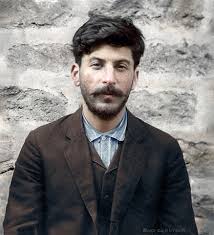
How did Stalin defeat his opponents?

‘It was because his opponents significantly underestimated him that Stalin was able to

win the power struggle in the years 1924 to 1929.’

Explain why you agree or disagree with this view.

It has been loosely accepted by some western historians that Stalin was either a mediocrity, or perhaps someone who posed as a mediocrity, merely for Machiavellian impact. However, although his victory in the power struggle was, in part, caused to an extent by his opponents underestimating him, it was also caused by his organisation, his raw political acumen and his unswerving personal ambition. 

One of the core factors behind historians in the west believing Stalin to be a total mediocrity rely on quotes from his political enemies: “Stalin,” recalls the Menshevik politician Nikolai Sukhanov in his memoirs of the Russian Revolution of 1917, “gave me the impression…of a grey blur which flickered obscurely and left no trace. There is really nothing more to be said about him.”

However, this overused quote is highly subjective as it is sourced from a Menshevik — a political party who rivalled the Bolsheviks until they were purged from the USSR after the  1921 Kronstadt Uprising. Also, Stalin himself was personally responsible for the violent destruction of the Georgian Menshevik movement, so Sukhanov’s quote is mired in subjectivity and comes across like a propaganda piece.

The truth was that Stalin was able to present himself as a man of reason, a moderate, a non-factional option amongst the egos mired in infighting. Trotsky, though the ‘heir apparent’ was, like many great men, destroyed by his own hubris. Despite his towering intellect and clear ability as a man of action (he had, after all, organised the October Revolution and played an important role in the victory of th Russian Civil War), his ability to alienate key party members, such as Kamenev and Zinvoviev led to his ultimate failure. A more prudent strategy on Trotsky’s part would have been to build a binding alliance with them, but he only did so when it was too late — Stalin completely outmanoeuvred Trotsky.

Trotsky was the heir apparent to Lenin, and was viciously attacked and besmirched by Zinoviev and Kamenev, whilst he did the same to them.

Of Stalin, Trotsky was utterly dismissive, failing to sense Stalin’s political genius: “he seemed a man destined to play second and third fiddle.” This quote would seem to corroborate the notion that Stalin’s opponents significantly underestimated him and that this indeed led to his victory in the power struggle.

However, once again, this source is written by one of Stalin’s avowed enemies, and is therefore riddled with bias. Trotsky’s tone appears to be that Stalin became the unquestioned leader of the USSR, not because of his own qualities, but because of Trotsky’s mistakes. This could not be further from the truth.

Stalin was a bank-robbing, kidnap-ransoming, poetry-writing, Georgian born son of an alcoholic shoemaker. He wrote and edited the Communist newspaper, Pravda and contributed to communist theory with his article Marxism and the National Question was first published in the March, April, and May 1913 issues of the Bolshevik journal Prosveshcheniye; Lenin was pleased with it. According to Montefiore, this was “Stalin’s most famous work”. Though not comparable with Trotsky, or nor indeed Zinoviev, Stalin was highly literate and displayed an able mind.

It is also arguable that Stalin’s role as a revolutionary was as a hard man, doing the unsavoury side of the role, rather than merely penning florid Marxist theory. After all, what could be more practical and marxist than robbing a bank to fund a revolution?

Moreover, Stalin was able to develop a truly underworld and proletarian network; a network whose unquestioned loyalty he was able to call upon when Lenin’s death caused the power vacuum and struggle. As the General Secretary of the Bolshevik Party, Stalin was able to flood a lot of strategic positions with men, and women, who owed their loyalty to him. This is of high significance, as the Bolshevik Party was broadly composed of two different types of men. Firstly, there were the Bourgeois, highly educated class of Party Members, highly versed in Marxist philosophy — men like Zinoviev and Trotsky. Secondly, there were less intellectual but authentically proletarian members. It is these proletarian members who Stalin appointed into strategic positions as General Secretary; these were citizens of the USSR who had no power in the old regime under the Tsar and who would be very appreciative to hold power in this revolutionary government.

Nonetheless, Stalin was appointed to this position because his opponents significantly underestimated him. Both Bukharin and Zinoviev could not tolerate each other in such a position but were mutually happy to have Stalin in such a position, as they did not regard comrade Koba with his genial manners and basic Georgian persona as a threat. Nevertheless, Stalin exploited this position for its maximum impact, creating a vast network within the Bolshevik government.

This was of crucial significance, as Stalin was able to be a moderate, advising against factionalism, whilst his opponents destroyed each other’s reputations.

Whilst Stalin’s personality is oft debated (he was notoriously rude, even to Lenin’s wife on occasion, but he was also genial and friendly), it is evident that his comrades did underestimate his opportunism, his ability to manipulate, organise, orchestrate, but mostly, they either underestimated, or turned a blind eye towards, his utter ruthlessness.

One notable example to the otherwise was Lenin’s wife and widow, Nadezhda Krupskaya nd quite probably, Lenin himself. Indeed, she ensured that Lenin’s last will and testament (if it was written by him), was sent to the Politburo for safekeeping and a critique. However, despite the fact that the wording was most scathing towards Stalin, it was also critical of Kamenev and Zinoviev, Trotsky and Bukharin. As these were all candidates for leadership, none of them were keen for it to be published, and as they underestimated dear comrade Koba at this point, Stalin escaped his recommended fate.

This allowed Stalin to present himself as a symbol of continuity from Lenin onto his regime. Whilst this lacked truth, the leadership cult Stalin manifested was in part due to the fact that his rivals collectively censored Lenin’s last will and testament. Moreover, as Stalin had maintained a lot of contact with Lenin during his illness, and as he attended Lenin’s funeral as a pallbearer (unlike Trotsky who was riddled with influenza), the narrative Stalin spun was far more sanitised and appealing to party members.
Evaluating a range of arguments, Stalin was able to win the power struggle due to his opponents underestimating him to a large extent. Nonetheless, it was the very qualities that he was underestimated upon that led to his success. Simon Montefiore, Stalin’s biographer, asserts that “Stalin was never average”. The fact that his political opponents couldn’t see him for what he truly was may have been their weakness, or it could have been a masterstroke by Stalin. Nonetheless, he was able to present himself as a moderate, or stood against factionalism, whilst his political opponents destroyed each other. He was able to use his position as General Secretary to create an amazing network within the Bolshevik Party and he was willing to be utterly ruthless when his opponents dithered.

Featured post

A philosophical investigation into Pierre from Tolstoy’s War and Peace by Samuel Mack-Poole

A philosophical investigation into Pierre from Tolstoy’s War and Peace

by Samuel Mack-Poole

“If we admit that human life can be ruled by reason, then all possibility of life is destroyed.” ~ Leo Tolstoy philosophises on the salience of our emotional experience of life.

 “Everything ends in death, everything.” ~ Prince Vasili, the Machiavellian, opens up to his failed intrigues to Pierre.

“Pale with quivering lips, Pierre snatched the copy.

‘You…! You scoundrel, I challenge you!’ he ejaculated, and, pushing back his chair, he rose from the table.” ~Pierre challenges Dolokhov, his wife’s lover.”

I feel like I have achieved something special – I read War and Peace by the late literary genius, Leo Tolstoy in one week whilst on holiday in beautiful Barcelona. And – seriously – some novelists truly deserve their intellectual kudos; Tolstoy stands out to me in this regard because he touches on the profound in his historical masterpiece.

Set, mostly, in the two most prominent cities of Russia, Moscow and St Petersburg, amongst the concerns, intrigues, debates, affairs, et cetera, of the native aristocracy, Tolstoy’s epic novel occurs from 1805 to 1820. Naturally, if you are acquainted with European history, you will know that the Napoleonic wars punctuated this period. The impact of these wars is keenly felt on Russia, its populace and even its aristocracy, for none are removed from the ravages of Napoleon’s crass ambition on the continent.

napoleon-i-9420291-1-raw
Napoleon Bonaparte (15 August 1769 – 5 May 1821) was one of the greatest military minds of all time. However, from a Russian perspective, he is a megalomaniac and egotist. 

However, it is not Napoleon’s military genius that I wish to examine; it is Pierre Bezukhov’s character. For me, he is the voice piece for Tolstoy. It is in Pierre that we see the greatest of all human attributes, unless you are Nietzschean or a fan of Ayn Rand.  Men like Pierre are rarely remembered by history for their kind wisdom, but he is the shining star of this novel, for he flies high above, soaring with the eagles.

1938
Friedrich Wilhelm Nietzsche (15 October 1844 – 25 August 1900) was a vehement critic of Christian morality. He thinks that Christianity makes communities herd together — when that happens, how can great individuals rise?

So, you may ask, what is it that I love about him? He starts the novel as a reckless drunk. He has no clear path forwards in life as he is tainted by his illegitimacy. Despite his father’s high birth (he is a Count, and well liked by the Tsar), Pierre is merely tolerated by high society rather than embraced. Highly aware of this, Pierre embraces his eccentricity. In his first scene, he lavishes praise upon Napoleon in 1805. What he disregards, either purposefully or absent-mindedly is the fact that his controversial opinions (defending the positive elements of the French revolution, which is antithetical to the aristocracy’s zeitgeist), though interesting, are not becoming of a Russian noble.

Nevertheless, it is Pierre’s social faux pas which first ingratiates him to the reader. He is earnest and full of passion, not retiring and shy! His rambunctious intellectual energy is something I can relate to and admire.

pierre
How can you not love the cheeky Pierre?

Pierre’s character development is somewhat immediate but dictated by circumstance rather than self-reflection (which later becomes Pierre’s strength). His father, whom lays dying in Saint Petersburg after a stroke, calls upon Pierre (his favourite illegitimate son) and writes him into his will; a will which guarantees him his father’s huge fortune (something the older and Machiavellian Prince Vasily covets for himself) and, of equal salience, legitimisation from the Tsar, wiping the stain of bastardy from Pierre.

This makes Pierre one of the most eligible bachelors in all of Russia. He is now free to marry whom he likes. His choice of wife is most illuminating.

What is interesting is the fact that the habits of young men, even intelligent and reflective ones like Pierre, are all too common through time: the sensuality and potent sexuality of beautiful women remain an Achilles’ heel.  Pierre’s lust gains the upper hand in his selection of a wife, proving as is said by Friar Lawrence in Romeo and Juliet, “Young men’s love then lies/ Not truly in their hearts, but in their eyes.”

Forsooth, Pierre’s choice of wife is lamentably poor. His lustful taste in Princess  Yelena “Helene” Vasiliyevna Kuragina backfires on him. Fight fire with fire, an old cliché goes.  Pierre’s lust, such a hollow reason — when it is the sole reason — for marriage, backfires on him, causing the reader to sympathise with his excessive humiliation. His wife, though very beautiful, and described to be enchantingly so, is something of a nymphomaniac.

helene
Princess Helene — Beauty can be enchanting, but it can be a dangerous weapon.

Not only is it implied she indulged in incest with her brother, the equally lustful and promiscuous Anatole (in many ways a male version of his sister), she sleeps with the seemingly crass and lower class Dolokhov, as well as Boris Drubetskoy and a foreign prince. Her affairs are out of all proportion, and the fact she can not sense an iota of Pierre’s intellectual greatness and profound character makes her extremely loathsome to the reader.

What the reader experiences with Pierre is something truly tragic. Whilst he makes poor choices, the consequences are far too severe. Surely, marrying a beautiful woman, though shallow, does not warrant that a man should play cuckold for the rest of his life in such a passive manner? This is a nightmare situation for any self-respecting man to countenance. It’s actually massively repugnant in all honesty.

Well, the short answer is no! Pierre demonstrates a keen sense of machismo by challenging the first lover of his wife, the beastly bully that is Dolokhov. On a personal level, I think Tolstoy makes him almost as detestable as Princess Helene, which demonstrates his skill as a writer. Dolokhov is a genuine sadist, a gloating, repugnant bully. His genuine zeal for provoking Pierre is bizarre as Pierre has been nothing but a good friend to him. Alas, perhaps Tolstoy is making a point that lust isn’t logical, as Dolokhov could have met his social ruin in this escapade.

Nonetheless, Pierre’s terrible temper erupts. I particularly love the way this scene was shown in the BBC version of War and Peace. See it here. Indeed, the primal rage that Pierre experiences ejaculates out of him. He completely forgets himself in his rage and emotional caprice. However, for some reason, I cannot help but think there is something intrinsically masculine and admirable about a man defending his injured honour. In the early 1800s, men could exact satisfaction in a duel. Consequently, Pierre, the drunkard Count, though extremely strong and muscular, is the underdog. Dolokhov, after all, is a highly trained and skilled soldier. When we boil down what that means, it is that Dolokhov is skilled at killing his fellow man; indeed, he revels in battle.

dolokhov
Dolokhov, although a sadist, becomes one of the great successes of Tolstoy’s creation due to his multi-dimensional persona.

Yet, in a fluke, or a twist of fate, Pierre wins his duel, seriously wounding Dolokhov, whilst remaining untouched himself. However, his reaction is immediate; he realises how foolish he has been to partake in this – “stupid, stupid, stupid!” he repeats to himself.  Also, on a sidenote, Tolstoy broadens Dolokhov’s character by revealing that he is devoted to his mother and hunchbacked sister. His animalistic fury at the world is then perhaps not innate, but caused by his family’s poverty.

The early Pierre is angry, passionate, clumsy and mistaken…and yet, there is something infinitely likeable about his eccentricity and pureness of heart.

Speaking of his anger, Pierre is not finished. He confronts his rather repugnant wanton wife with pure, unadulterated and understandable anger – it is, morally, his lowest point in the novel, although the reader does sympathise tremendously. What man would wish to be publicly humiliated in such a manner? The stout Pierre, perhaps emboldened in his defeat of Dolokhov and drunk on fury, confronts his wife over her affairs. “I’ll kill you!”  he exclaims to his wife and he even feels “fascination and delight of frenzy”. What Pierre doesn’t realise is that he has become worse than Dolokhov and his wife.

He was never a violent man, before or after this incident. Yet as Nietzsche would say, “Beware that, when fighting monsters, you yourself do not become a monster…for when you gaze long into the abyss, the abyss gazes also into you.”

And yet, what I haven’t told you is that Pierre is capable of great self-reflection; for he recognises his own untruth: he told Helene, “je vous aime” (I love you). This, Pierre recognises, was a lie. His falsehood means that he is as guilty as Helene, because his lie, in matters as delicate as love and marriage surely has profound consequences. It is Pierre’s inner philosopher that I admire; he does not fall into Wittgenstein’s trap (“Nothing is so difficult as not deceiving oneself.”) but is capable of a ruthless self-honesty most of us could not bear. He is a natural born philosopher.

It is often a supreme self-awareness which sets the philosopher poet apart.

Instead of giving into hatred and self-hatred and becoming a male version of Lady Havisham, Pierre recovers from his sense of misfortune and humiliation. Indeed, he joins the Freemasons, which enables him to serve his fellow man, rather than focus his energy on drunken debauchery and lust. He becomes a philanthropist, desiring schools and hospitals for the serfs on his estates. He also wishes to give his serfs freedom (although he is quickly talked out of that fancy).

What we see in Pierre is an ardent desire to rise above his decadence and do something worthwhile. An atheist will not like this, and perhaps because it was written in the paradigm of the 1800s, but Pierre’s most Maslow like self-actualisation occurs due to the fact he departs from a seemingly nihilistic atheism into a life-affirming theism. For, to be a freemason, one has to believe in a creator. Whether that creator is Judeo-Christian, well, it’s never explored, but it seems, at least in this sense, God is good.

maslow-5
Abraham Maslow wrote this psychological theory to display how human’s can achieve their potential through fufilling their needs.

What is striking about Pierre is his friendship with Prince Andrew, who appears at the start of the novel to be a better man than Pierre in all regards. He is genuinely aristocratic, not pseudo-legitimised like Pierre. Moreover, Prince Andrew can converse in polite society without upsetting the apple cart. He is deemed a success: intelligent yet reserved, part of General Kutuzov’s staff and yet willing to bravely fight on the front, married to a respectable woman, an heir to a fortune, not a drunkard nor a braggart.

Naturally, the two are best friends, as they share a passion for true conversations. Indeed, they only talk about the essence of life, and the subjective meaning they have derived from it. Their friendship, one which has depth, is one of loyalty. They are soul brothers in my opinion. In validating this claim, the evidence in War and Peace is clear: Pierre loves Prince Andrew so much, he does not canvass for Natasha’s affection, even though she is the one woman he does feel intense romantic love for. This shows how much esteem Pierre has for Prince Andrew and what a gentleman he is.

The juxtaposition of Prince Andrew Bolkonksy and Count Pierre Bezukhov is one which yields interesting contradictions. Whilst Pierre initially only lived for himself, he found life devoid of meaning; Andrew, on the other hand has lived for society, and is not satisfied in his marriage to his albeit respectable, but seemingly unlovable, wife.  After they both suffer from unsuccessful marriages (Andrew’s marriage to Lise is loveless; she dies in childbirth and he suffers amazing guilt as he did not love her), they decide to reverse their philosophies. Andrew lives only for himself; Pierre lives only for others.

andrew and Pierre.jpg
Andrew and Pierre — the bromance is real.

Pierre’s philanthropy makes him the better man, in my view. Tolstoy has encouraged this purposefully (after all, he did write the novel), as he was Christian, even if he was an eccentric one. Andrew comes across as more severe and unforgiving, especially in his treatment of Natasha, very much the Mary Magdalene of War and Peace.

Though Natasha suffers in War and Peace, it is nothing compared to Pierre’s cruel treatment by the Napoleonic French forces. Pierre symbolically suffers for Russia; though utterly unskilled in the ways of war, he attends the Battle of Borodino* and does his damndest to assist a Russian artillery battalion. He serves bravely, despite the fact the Russians are under heavy fire from the French artillery, Pierre doesn’t run away. Instead, he is injured and knocked out, but he recovers and goes to Moscow with a mission: to assassinate Napoleon.

Due to Pierre’s wish to serve his fellow man, instead of taking life, he saves a life. Although he didn’t intend on it, Pierre saves an impoverished child from a building which is on fire. Despite this good deed, he is falsely punished by the French troops for pyromania. This, my friends, is where Pierre’s suffering kicks in.

Forced on a long march through Russia by French troops, Pierre faces malnutrition, cruelty, sadism, caprice, and, most curiously, self-actualisation. This comes in the form of Platon, one of the few peasants to actually fully crafted by the Great Tolstoy. Despite the fact Platon is very basic, and even simple, it is his simple attitude to life and his happiness in the moment that Pierre comes to admire. Platon is the only peasant to befriend Pierre, showing him true kindness. This wonderful peasant demonstrates that uneducated people can live fulfilled lives with a philosophy that embraces the small pleasures in life, adding a sense of resilience. In many ways, Platon reminds me of the Japanese philosophy: that of Ikigai.

Ikigai
Do you even Ikigai, brah?

Ikigai is a Japanese philosophy which espouses living in the moment, small pleasures, harmony and stability, starting small, and releasing oneself. For me, Platon is like a living embodiment of this Japanese philosophy – one which is great for the human psyche, as it is utterly life-affirming.

Pierre actively learns that he has been guilty of overthinking. Therefore, after his inordinate suffering at the hands of his French captors, he decides to live a simple life. He marries the wonderful Natasha, who makes him very happy. He has children, who he loves. Other children look up to him, not because of his bravery in battle despite not being a solider, or due to the fact he won a duel,  but because he radiates the true gift we can all share: that of kindness.

And that is why I love Pierre.

* Before the battle, Pierre chances upon Dolokhov, whom apologise to Pierre unexpectedly. Once the bully, Dolokhov knows he may die in battle; thus he wants to make things right between the two of them.See it here.

young tolstoy
The young Tolstoy. What a chap!


Featured post

Meet Our Philosophers!

Name? Serhan Ozturk Mehmet Photo you feel comfortable sharing:
Age? 23  serhan
Gender? Male
Favoured philosopher/philosophical stance? Alan Watts
Profession? Teacher
Which philosopher would you give your last Rolo to? Rumi

Blogs created by Serhan:

A Cheeky Analysis of Rumi.


Name? Sean Ash


Photo you feel comfortable sharing:
Age? 35  sean
Gender? Male
Favoured philosopher/philosophical stance? Georg Wilhelm Friedrich Hegel
Profession? Educator
Which philosopher would you give your last Rolo to? I would give my last Rolo to Plato and ask him to give it to Socrates.

Blogs created by Sean:

Socio-Emo Extinct.


Name? Samuel Mack-Poole Photo you feel comfortable sharing:
Age? 32  sam
Gender? Male
Favoured philosopher/philosophical stance? Nietzsche, Jesus, Norse mythology, Christopher Hitchens. Viva la contradiction.
Profession? Teacher
Which philosopher would you give your last Rolo to? Marx, as he is so fond of sharing.

Blogs created by Samuel:

A (Very) Brief Philosophical Inquiry of History


Name? Martin Prior Photo you feel comfortable sharing:
Age? 72  martin
Gender? Male
Favoured philosopher/philosophical stance? Logician, scientific socialist.
Profession? Retired
Which philosopher would you give your last Rolo to? Arthur N Prior or Bertrand Russel.

Blogs created by Martin:

Brexit, Jean Monnet and the ethics of ratcheting


Name? Ellese Elliott Photo you feel comfortable sharing:
Age? Declined to answer in strong terms. I could not get the consent of this philosopher to share a photo. It was not that she did not give it, she did not respond in time, and I can’t share information without consent (Ed).
Gender? Is a sterotype.
Favoured philosopher/philosophical stance? Stokely Carmichael and Love-ism.
Profession? Dole-ism.
Which philosopher would you give your last Rolo to? A starving one.

Blogs created by Ellese:

Eaten By Your Appetite

Featured post

What does the future hold? A philosophical investigation by Samuel Mack-Poole

“Perhaps the best hope for the future is that ways will be found of increasing the scope and intensity of sympathy.” – Betrand Russell.

“If I had asked people what they wanted, they would have said faster horses.” — Henry Ford.

We stand at the crossroads of history in 2021. The world is about to undergo a fundamental technological revolution, one which will change the world forever – one which is utterly irreversible. Many of us are so focused on the now, we haven’t even begun to consider how much society will be impacted by this over the next five, ten or twenty years. However, if you think that the world remains as it is, even for a fleeting moment, you are wrong. The world is in a constant state of flux and as the ancient Greek philosopher, Heraclitus, stated, “No man ever steps in the same river twice, for it’s not the same river and he’s not the same man.”

Society has moved through different eras, and each of these eras have been dependent upon the technological developments of mankind.  There are many different ways to measure this and this can be made infinitely more complex, so I have attempted, according to my subjective biases to order them. The different stages have broadly been as so:

The Stone Age — The Hunter Gatherer Society of cavemen and women with simple tools.

The Bronze Age — the melting point of bronze is lower than iron, so bronze was easier to develop and shape into weaponry, technological use and for religious decoration.

The Iron Age — the melting point of iron is higher than bronze, but produces far more resilient weaponry.

The Feudal Age — whereby a highly class structured society is reliant upon a peasant class at its base to support the food production

The Literate Age — following the invention of the printing press by Gutenberg in 1440, the subsequent Renaissance, Reformation and Age of Enlightenment saw crucial changes in every single human field of intellectual endeavour.

The Industrial Age — whereby powerful machines can replace human labour — this led to the end of the main role of human labour being focused on agriculture and made them seek factory work in towns and cities.

The High Technological Age – the age of the internet, robotics, mobile phones, automobiles, Blockchains, nuclear capability, highly sophisticated computer programming.

These ages, as you may have noticed, pass within ever more concise time periods — thus the rate of change in human development appears to be almost exponential. I am writing this in 2021, and by 2051, I will come back and re-read this.Whether I am correct or not, well, that will be of the utmost interest. I will now list the changes I think will happen in society.

Blockchain Adoption:

One of the most important developments will be blockchain adoption. This has already happened to a fair degree with Bitcoin, an innovation by Satoshi Nakamoto. This innovation has been the most famous example of a use case of blockchain technology. But, what is a blockchain? What does it do?

“A blockchain is essentially a digital ledger that keeps a record of all transactions carried out on the system. These transactions are then duplicated to be reflected across all computer systems active on the blockchain. Every time a new transaction is carried out the blockchain stores the data on that participant’s block and is reflected across all digital ledgers on that network. All transaction data present on the systems of the blockchain can be accessed from any part of the world. 

Each time data is stored in a block it creates an irreversible timestamp when it becomes a part of the chain. Blockchain is a decentralised database and is managed by multiple participants, it is known as Distributed Ledger Technology (DLT).”

The fact these blockchains are decentralised is of major importance. This means that no single country or government controls it, and Bitcoin is not an inflationary product. In fact, there will only ever be 21 million Bitcoin (and much of it has already been lost…see here). The scarcity of it makes it a deflationary store of value which is more robust than gold and has made many millionaires and even some billionaires.

Even though the major parabolic gains have been made by Bitcoin, I can’t see it disappearing for a long time and now that nation states are adopting it (El Salvador has already done so and other Latin American countries have made positive noises about doing the same). Therefore, I am forecasting that Bitcoin will have a lot of adoption with perhaps 1 in 5 people in the UK adopting it as an asset class within the next twenty years.

Also, I would like to predict that Ethereum and Cardano will see mass adoption, too. Whilst Bitcoin is like digital gold, Ethereum and Cardano will be like digital oil. These blockchains will function to allow decentralised finance, digital art purchases via NFTs, and even use cases which aren’t financial in motive: educational records, telecommunications and health records can also be revolutionised via blockchain technology. I would imagine that Ethereum and Cardano become household names and expand massively over the next twenty years.

Automation:

The slow, prolonged death of unskilled labour has begun. Its death rattle will be heard over the next thirty years and unemployment will rise sharply. I used to work in Sainsbury’s when I was studying at University. I can remember seeing the first self-service checkout. There was a single checkout. Just one. Now, if we go into any supermarket, the self-service checkouts dominate the customer experience in their adoption: thus, the corporate shareholders are making much greater profits as the greatest expenditure of most businesses is the payroll of its employees.

Amazon and Tesco are developing just walk out shops, whereby even self-checkouts are obsolete, using bleeding edge technology of multiple sophisticated cameras. This model will save customers a lot of time — that is, unless they want home delivered shopping, which many customers moved towards during the pandemic.

When one thinks of banks — many of them have closed at a branch level, as mobile banking has eroded the need for them. An app is much cheaper for banks to manage, just think of the thousands and thousands of staff who have been made redundant over the past 15 years (and the money banks have saved as a consequence).

The real big change, which many are skeptical about, is driverless cars. However, make no mistake, it is coming and it will be trialled in metropolitan cities within the next five years. A friend of mine, who works for Openreach, has been installing 5G in lamp posts along the historic streets of London. Ultimately, it will be Uber which benefits from this. Also, it will be Uber drivers who will feel the pain of this technological great leap forward. They will come to realise that they have been working themselves out of a job. 

What is strange is that although this will be a huge breakthrough with huge adoption, I can feel many people doubting the safety of automated cars. Despite this, think of how many accidents are caused through human error every year — 1472 people lost their lives due to this precise reason in 2020. Has anyone stopped driving cars as a consequence? However, I will guarantee the first death due to driverless car technology will be over-reported amongst a huge amount of moral panic.

Nonetheless, it is the consequences of this which will be far-reaching and most significant. Due to automation, many will face the spectre of unemployment.  Where it is at 4.7% today, over the next thirty years, it may be, as a permanent feature, three, four or even five times higher than that figure. Whilst there will be new jobs and new economies, these jobs will be high-skilled, requiring a high level of intelligence and/or education for employees to access them.

It is also very unrealistic for society to expect men who have made a living as taxi drivers for Uber to become coders. The same goes for those who would choose to work as a cashier in a supermarket — most of these workers probably couldn’t learn how to work in IT as a coder.

This would then necessitate that Universal Basic Income became utterly necessary. Governments have learned some lessons from the past (the crippling economic Depression of the 1930s led to the rise of totalitarian regimes in Europe, mass unemployment makes young men much more likely to be radicalised). However, this brave new world, awash with brilliant technology will lead to an increase in inequality — the rich will definitely get richer and the poor will definitely get poorer.

I would think, with such a high level of unemployment, a focus on entertainment, volunteering, physical fitness and health and beauty would become paramount. Apps which create online communities would be essential for human connection and cooperation — and investment into the unemployed which gives them value would be essential (and actually create mini economies).

As for the housing market, there will be a growing disparity between those who are house owners and those who are not. This will create a lot of class tension and without a lot of investment into the proletariat, this could create conditions ideal for Marxist ideology to gain popularity. Does this mean a Marxist Revolution will happen? It’s a possibility, but capitalism has shown its resilience over the last century — the USSR, with all of its mighty power, could not export its global revolution.

A couple of other things which I forecast are as follows:

  1. Say goodbye to written exams. The written word is dying and all forms seem to be digital these days. As a consequence, all students will require computers. Textbooks will no longer be printed. Everything is going digital!
  2. Fossil fuels will be phased out. This may seem trite, but it had to be mentioned. As a consequence, electric cars will be utilised at a much wider adoption.
  3. This next notion is a little out there but Jacques Fresco’s ideas may see wider adoption. He definitely was a maverick, but his ideas are based upon sustainability, which seems to be an area we are moving towards. However, his ideas have already seen some adoption in Brazil.

Why should Philosophy be taught in mainstream education? by Samuel Mack-Poole

When I analyse the curriculum in England, there is something missing. Something I hold to be incredibly important in my heart and my mind. It’s glaring by its omission. The hollowness at the heart of the curriculum is: philosophy. 

Why isn’t philosophy taught? We teach students what to think and how to memorise a wide range of facts in a knowledge rich curriculum (one which has been proven to not be fit for purpose during the Covid-19 pandemic), but we don’t teach children how to think. 

Now that last clause was a little vague — so what do I mean by ‘thinking’? I mean higher thought, the ability to question, challenge, be independent, be skeptical, to know the difference between inductive and deductive reasoning, to be a fully conscious citizen of the society in which we reside. Time and time again, employers state that students come out of an educational process whereby they can not think for themselves, where they lack essential communication skills (speaking and listening, reading and writing).

Surely, wouldn’t the study of philosophy help with this? When adults get home after the drudgery of the 9-5, a lot of them go onto the internet and enjoy a lively discussion or debate, which is underpinned by philosophical skills. Also, to be clear, although critical thinking skills are inherent to philosophy, I genuinely think they transcend ‘critical thinking’, which seems to be a diluted form of philosophy via the backdoor for bourgeois university students at red brick universities.

As an educationalist, one of the most endearing aspects of my role is that I deal with the curiosity of children. It is truly endearing. So, why do many adults lack that trait? Is it socialised out of us — are British citizens too repressed as we live in a reserved and closed culture?

The French have a far more open attitude and they actively study philosophy in high school? Is there a causality here, or am I simplifying one case very, very dangerously?

There is also a class divide,gap and gulf when it comes to the study of philosophy. Many politicians study Philosophy, Politics and Economics — they are reared for leadership from their Etonian ivory towers. Philosophy is deemed worthy to be one third of what is required in a degree which is focused upon developing political leadership in this country, but it is the reserve of bourgeois elites, whilst the proletariat are given an entirely different diet altogether.

Where do children from state schools, from impoverished backgrounds, get to access philosophy on their curriculum? Well, they don’t, unless they are very, very lucky to access it at ‘A’ level (the 16-18 year old path for ‘academic’ students in the UK). Most students just won’t get this opportunity. I find this an incredible shame — this isn’t because I hate other subject disciplines (history, literature and theology can tackle weighty topics). It’s because philosophy covers such a wide range of topics, and its explicit aim is to be a lover of wisdom (philo = love, sophos = wisdom, philo+sophos = a lover of wisdom).

Society could do with a few more wise minds, I am sure we could all agree.

If we want to create a society where politicians are elected for their policies, and not whether they look good whilst eating a bacon sandwich, then philosophy would be integral to our curriculum. If we want a society whereby its citizens could organise and hold its government to account over sound arguments, instead of glibly being fooled by populist faux patriotic propaganda, then philosophy is utterly necessary.

Philosophy is a subject which has been accused of being overly cerebral, abstract and head in the clouds but this is something I would refute: we live in a world which is ever more cerebral, ever more abstract…a world full of information, which has undergone revolution after revolution (violent, industrial and technological), a world which lives in the zeitgeist of ever accelerating change.

The main job which men all of the world do right now is drive. However, we all know that the age of the driverless car is coming — we all know that jobs once carried out by humans are being mechanised. Go to any supermarket, airport or bank and you will see machines which have replaced cashiers and passport officials. Also, computers will become so sophisticated that human labour will be increasingly replaced in a variety of ways. This entails that humans will need to think in increasingly complex ways (as long as the current capitalist system continues to exist in its current form, or at least something similar, whereby human needs are not met and a tiny minority has the disproportionate majority of power and capital).

A brave new world of philosopher kings and queens would be ready to change global systems with their gifted thinking skills and the real world application of philosophy. Marx once said that ‘The philosophers have only interpreted the world, in various ways; the point is to change it’. To add some context, Marx was referring to philosophers prior to him, but Plato (in his Republic), Boethius (in his Consolation of Philosophy)  and Machiavelli (in The Prince) did change the world in the spheres of government and mental resilience.

The current government claims to desire a meritocracy, but they are anything but. Universally privileged, private school educated, and Etonian, they seem to be manufactured from a narrow social class which seems to think they have a manifest destiny in their right to govern. There is a genuine distance between them and the general public. Most of it is social network and the old boys club, but a key factor is the education they receive and the value philosophy has in their circles. They have an access to a way of thinking which the general public do not and it allows them to engage in sophistry which allows them to escape the responsibility of their position. 

If we want to build a better society, one which improves, is able to problem solve, has active, curious and engaged citizens, if we want to see wisdom prevail, if we want a wiser, better world, then it is time to engage our children with an education rich in philosophy. Or, we can continue with the same madness we have right now, whereby rich elites control society with their undeserved privilege.

The Utter Ineffectiveness of the Tory Government

“There will be no end to the troubles of states, or of humanity itself, till philosophers become kings in this world, or till those we now call kings and rulers really and truly become philosophers, and political power and philosophy thus come into the same hands.” ~Plato, The Republic.

“Philosophers have hitherto only interpreted the world in various ways; the point is to change it” ~ Karl Marx, Theses of Feuerbach.

The Tory Government, the Etonian elites, is crashing like the Titanic on the iceberg of Covid-19 — the fact remains, however, that just like the iceberg didn’t have to be as damaging to the poor victims on the Titanic as it was (due to the multiple errors of the crew on the ship), the ineptitude of Boris Johnson’s cabinet has exacerbated and perpetuated this damned virus.

And the whole world is watching.

Again and again, a thought has struck me — the distance between the Etonian elites, their strange bubble of reality, their unrepresentative life experience hardly equipping them to govern a nation they are so far removed from. These privileged few seem to have been taught that they can achieve anything, if they merely believe they can.

The issue is that this view isn’t grounded in reality. King Cnut famously, as the apocryphal tale goes, tried to instruct the sea to reverse its tide — and yet failed, as he was not omnipotent. One wonders if the current crop of (so-called) leaders in the UK know this. Has their narcissism and sense of entitlement truly gotten the better of them? The resounding answer would seem to be an emphatic ‘yes’.

Where is my evidence for this, you may ask? A great example would be the Draconian and extremely rigid position Boris Johnson has taken towards education. He has been quite foolish by being utterly relentless and unyielding in his attitude: it has not been safe, it has not been wise, and the consequences have been appalling for the British public to suffer: Christmas plans ruined for families up and down the country, a spike of a new strain rampantly infecting the nation, small businesses folding on every high street.

The Council Leader for the Royal Borough of Greenwich, Dan Thorpe, demonstrated bravery and initiative by standing up to this bully-boy government, in true David and Goliath fashion, he recommended that schools close early for Christmas — he sent a letter, written with the genuine concern of public health in mind — only to be threatened with legal action by this private school educated Junta! This action genuinely enraged me, as it was dictatorial in nature and intent. I must confess, I found it hard to sleep on the day that Gavin Williamson et al decided to stifle the voice of local democracy.

This government were willing to so brash and full of bravado, yet a week later, we have arrived in Tier 4, and schools will not be opening for KS3 in secondary schools for the first week of term (and I do wonder whether exam classes will return with the current strain being far more infectious). They appear, and in all probability are, making things up off the hoof. Examples of this are as such:

  1. Being one of the last countries to shutdown with the first outbreak, causing the UK to have one of the worst death counts in multiple methods of demographic analysis.
  2. Buying incorrect PPE from Turkey, and then buying PPE at well above market price.
  3. The Scotch Egg pub debacle.
  4. Choosing to send hundreds of children and adults from different bubbles into a single, interior environment (schools) and then sending Michael Gove on TV to state this was ‘safe’. This was a lie.
  5. Boris Johnson missing 5 emergency Cobra meetings .
  6. The GCSE and ‘A’ Level fiasco of the summer of 2020.
  7. Essentially cancelling Christmas for 2020 after forcing schools to be open with an attitude of toxic machismo.
  8. Telling schools they need to roll out testing which should only be delivered by professionals (to do in 2 weeks over the Christmas holidays, what they could not achieve in 8 months of government).

This list could have been far longer, but for sake of brevity, that’s what came to mind.

One has to wonder what has gone though the minds of those in government — how can they have harnessed the will of the majority of people over Brexit (which has not been delivered) and then lost touch with the needs of the British Public, whether they be working or middle class? Perhaps it is because they were ‘in touch’ to begin with and they merely reacted to a populist wave of Euroscepticism and wielded it like a hammer to the nation.

As a teacher, I feel genuinely let down and dismayed by recent events. I find it ironic how a strata of society which is overtly prepped for leadership due to their undeserved privilege can be so woefully poor at it. This government’s decisions have been unwelcome, at best reactive, and, sadly, for the British public, woefully inadequate. For a government so huge on accountability on the public sector (reckless target setting, constant high stakes inspections, goalposts which always shift), they have demonstrated that they are unworthy to govern.

Keir Starmer, what are you waiting for? This is the time to motion a vote of no-confidence in this rotten government to expose its hollow foundations and corrupt philosophy. It seems he has missed a series of golden opportunities to hold this government to account — instead he seems to be hellbent on appearing as centrist as possible. The problem with sitting on the fence as that eventually it causes one a pain in the posterior due to inactivity.

Thusnelda The Brave — by Samuel Mack-Poole

 “And one day she discovered that she was fierce, and strong, and full of fire, and that not even she could hold herself back because her passion burned brighter than her fears.” – Mark Anthony

Thusnelda, ready and waiting to inspire her Germanic brethren into battle

Barbarians was recently released on Netflix. It is a historical drama, loosely based upon the true events of Arminius’ insurrection against the imperial Roman legions in what was known as Occupied Germania in 9AD. The production costs of the show are obviously very high and the casting has been carefully considered.

The plot, based upon historical records, is fascinating. Arminius (below, as played by Lawrence Rupp), is born to a Germanic Prince, Segimerus. He was, however, as the fates would have it, taken as a hostage by the Roman Empire. Consequently, he has an identity complex at the beginning of Barbarian. Is he Roman or is he German? Can he be both in a world of binaries?

Nonetheless, despite the fact he was (at least in the Netflix adaptation), raised by Publius Quinctilius Varus, a Roman general and politician, the blood in his veins runs only with strident German patriotism. His identity crisis yields to his ancestral roots but this is not altogether surprising; for the Romans are very cruel. They demand tributes of grain and livestock which symbolises treachery on their part, for this contradicts earlier treaties they made.

Furthermore, the Romans abuse their power by forcing the proud Germans to kiss their standard, which makes the chieftains feel humiliated. Their soldiers defile the German women abuse their children. They are very much text book villains — they scorn the ancient customs of Germanic tribes and sneer at the more obsequious attempts to gain favour. It seems the Romans can never be satisfied: disobey them, the Germans are punished with draconian zeal. Attempts to ingratiate themselves with their colonial culture are met with derision.

The cultural clash is actually fascinating: language, religion, law, values…they all collide in this hostile colonisation.

With all of this conflict, thus enter Thusnelda. Undoubtedly beautiful, she steals the show in this series. Played by Jeanne Goursaud (as seen below) to immense impact, Thusnelda has a charisma which transcends her mere physical appearance. With a deep spiritual connection to Wotan and the Norse gods, she prays ardently. I understand that Christians and atheists may find this objectionable: Christians will naturally dislike paganism and atheists dislike all religions. Nonetheless, we should understand the historical context: almost all humans were religious and the Germanic pantheon were utilised to explain the complexity of the phenomenology of seasonal cycles, health, fertility, fortune and war.

The manner of her prayer is something to behold. The zeal, the passion, the desire for change…she is truly earnest in her resolve to see the scourge of the Romans removed from her everyday existence. Blaming herself for her kid brother’s serious cranial injuries at the hands of a thuggish Roman soldier, she proclaims deep in the woods in the middle of the night:

“Women of the Woods, take my sacrifice. (she cuts her hand and lets the blood fall into the Earth) Mother of Blood, give me courage and strength until my brother is avenged. Mother of Fire, burn doubt and hesitation until my brother is avenged. And Sister of Wrath send me those horrible twins Ruin and Death. Be a good sister to me, not like I was.”

This is just one example of her deep spiritual nature — there are many more. What is significant to note is the defined impact her spirituality has on various menfolk of the Germanic tribes. To put is simply, she inspires bravery in them. Let us think carefully about what that really means. It means that she can motivate them to kill and die for a cause: freedom from the Roman colonial oppressors.

Thusnelda convinces her peers that she has ‘the sight’ — she is a Seer (fundamentally an individual with the ability to see into the future). She even goes to the lengths of wounding her beautiful face and one of her eyes as a sacrifice to Wotan (this is honorific due to the fact Wotan made the same sacrifice and due to the authenticity it would have held for followers of the German Pantheon).

Vladimir Ilyich Ulyanov, better known as Lenin, once said, “Sometimes – history needs a push.” As a Marxist historian, I believe that class conflict and demographic factors (economic, social, political) play a greater role in history than that of significant individuals. Nevertheless, she does play a truly significant role in influencing, in comparison to her, very average men. They lack the raw courage she has; they lack the self-belief, the will and reason to fight. She is so in love with her people, she realises what must be done in order to defend them against such exploitative colonial masters.

Me with a kickass Lenin shirt. “Sometimes – history needs a push.”

What is all the more interesting is the parallel has has with her cowardly and Machiavellian father, Segestes. He is the most supine ‘barbarian’ and displays the least affinity for his own culture. In fact, he is for all intents and purposes a 9AD Germanic Uncle Tom; he shaves his face like a Roman, learns Latin, tries to betray Arminius, bows down to kiss the standard of the Roman Eagle*…one could admire him for his ruthless if it were not so intertwined with his cowardly, self-seeking ambition (at the expense of his entire culture).

His daughter holds the needs of the tribe above that of her own life: Thusnelda has come to the realisation that her entire culture, her entire tribe, will die for all intents and purposes. Therefore, armed rebellion against the Romans, victory or death is all she has. Her love for her people forces her to use all of her willpower, her spiritual vitality and physical beauty to resist the Romans. It’s every bit as amazing as it sounds.

*What I found most interesting is the fact that the Germanic tribesmen and the Romans believed the standard of the Eagle had magical properties. What is fascinating is the fact that warfare had a genuine spiritual aspect — it could fill men with courage and self-belief. I had not considered that the Roman Eagle standard was regarded as a such. I had merely thought of it as a symbol of Roman authority, but this show forced me to think deeply on this matter.

A Critical Evaluation of Lenin’s Impact on the October 1917 Revolution by Samuel Mack-Poole

“Screw your courage to the sticking-place, /And we’ll not fail.” Lady Macbeth, Act 1 Scene 7.

 “Sometimes – history needs a push.” 

Vladimir_Lenin

Vladimir Ilyich Ulyanov (22 April 1870 – 21 January 1924) better known by his alias, Lenin, is a man whose significance is keenly felt in the annals of history. Arguably, due to the existence of a state he created, the USSR (1917-1991), his impact is amongst the most salient in the 20th century. Both a revolutionary and a political philosopher, his single-minded vitality contributed more to the October Revolution than Trotsky or Stalin. However deterministic it sounds to the expert historian, revolution was inevitable in 1917: Russia was ailing from the weak leadership of the Tsar and its social, political, economic, industrial and technological backwardness. A rich tapestry of factors caused the Russian Revolutions of 1917 (there were two very different revolutions, the more Bourgeois March Revolution, which led to Kerensky ruling the country, and the October Revolution, led by Lenin and executed by Trotsky).

Nonetheless, the character of the October Revolution was shaped by Lenin. It is, however ironic it may sound, deemed rather simplistic to accentuate the role of individuals in history according to Marxist theory; great man theory is now the reserve of the intellectually naive, or at the very least, the retrograde. Let me be clear: this is not what I am attempting to do.

Lenin’s role in the October Revolution is amongst one of many factors, but his ironclad authority amongst the Bolshevik movement, his bullheaded resilience when his ideas were challenged and his indefatigable nature genuinely amaze me. When an international alliance of imperialist states challenged the embryonic USSR, he did not despair; he screwed his courage to the sticking place. Let me clear; Lenin was not immune from illness, he was not 7 foot tall and was not infallible. 

However, the 1917 October Revolution could not have happened in the manner it did without him as he was, without question, the leader of the Bolsheviks.

Now, the more historically astute may be thinking, hang on a second, wasn’t it Trotsky who was on the ground in October 1917, storming the winter palace?

Well, yes and no.

Indeed, it was Trotsky who organised the revolution in a practical sense: he was after all, the president of the Petrograd Soviet, which afforded him genuine power. Nevertheless, it was Lenin who had argued for this to happen. According to Steinberg, (2001) in Voices of the Revolution, Lenin stated that,  “an armed uprising is inevitable, and that the time for it is fully ripe”. He was, of course, as history would judge, utterly correct in his instincts.

The Bolshevik committee voted 10-2 in favour of this resolution, and seizing power actually seems curiously easy. The interim government lacked support from both the left and the right, so the resultant power vacuum and Bolshevik revolution was inevitable. When General Kornilov proposed to march on Petrograd, Lenin realised that his moment had come — history needed a push if a Marxist revolution would be undertaken. One of Lenin’s great strengths was his clarity of perception; he knew, quite simply, what needed to be done in order for the Bolsheviks to rule Russia — they had to seize power in this moment of crisis.

For the Kornilov Affair was a moment of infighting between the Bourgeoisie; a united Bolshevik movement, however unrepresentative of the holistic nation’s political persuasion, was more potent than an oppressive class torn apart by infighting. The Russian nation was utterly fatigued of war — Kerensky, the leader of the Duma and the provisional government, had idiotically attempted to rally the beleaguered army, beset by continual defeats and mass desertions, into what can only be described as a suicide attack against the German army.

The insight Lenin had, which was to channel the Marxist theory of action into action (something which Marxist theorists often forget), undoubtedly changed the course of history — however, there is a significant caveat to be mentioned here: the provisional government was doomed to fail as it lacked support from both the left and the right. Ergo, in this power vacuum, something new would arise — and it is within this paradigm where significant individuals make critical decisions.

Whilst Lenin delegated the physical and practical task of seizing power to Trotsky (in what in actuality, was more of a coup d’etat than a revolution), the decider was Lenin. This actually flies in the face of decisions by committee, but there is little doubt that Lenin dominated the committees with his sheer force of personality.

After the supposed ‘Storming’ of the Winter Palace (whereby Trotsky’s 40’000 troops found no meaningful resistance whatsoever), it would be Lenin who shaped the early policies of the USSR. Nonetheless, this piece is essentially a homage to Lenin’s acute realisation: amongst the chaos and over-complicated nature of many Marxist revolutionaries, it seems that Lenin alone had the focus to realise that as long as the Bolsheviks occupied strategic infrastructure (train stations, post offices and the like), they could seize power and use that position as something to build on.

Why is such clarity so rare?

Whilst all of the military, political, social, economic and other multitudinous historical ingredients were just right, it took personal and strategic savvy to bake a revolutionary cake.

In my next article, I will analyse and describe Lenin’s crucial role in securing the revolution. Again, however, it will prove to be a similar Nietzschean will to power scenario, amongst a tempest of other factors. I do find it genuinely enthralling how an individual can be so single minded, when all around him his peers would flag. To have such psychological strength, however, took its toll on Lenin, as he died prematurely, leaving no nominated successor in his stead as that would have contradicted Marxist ideology.

Lenin died on the 24th of January, 1924, after a couple of very serious strokes and an assassination attempt by Fanny Kaplan which bullets that were lodged in his body and health complications thereafter. It is also suspected that Lenin suffered from syphilis, though there is no firm evidence for this. Despite his premature death, Lenin left a legacy which will echo over the eons of humanity; as long as historical records are maintained, his name will have to be mentioned due to the momentous global changes brought about by the Russian Revolution (of which, he played the crucial role as a decider, if not a boot on the ground). 

An honest review of Boethius’ The Consolation of Philosophy By Samuel Mack-Poole

An honest review of Boethius’ The Consolation of Philosophy

By Samuel Mack-Poole


ForutuneWheel (1)

“Life’s but a walking shadow, a poor player, That struts and frets his hour upon the stage,
And then is heard no more. It is a tale Told by an idiot, full of sound and fury, Signifying nothing.” William Shakespeare, Macbeth.

“So we see that even when Fortuna spins us downward, the wheel sometimes halts for a moment and we find ourselves in a good, small cycle within the larger bad cycle. The universe, of course, is based upon the principle of the circle within the circle. At the moment, I am in an inner circle. Of course, smaller circles within this circle are also possible.”
― John Kennedy Toole, A Confederacy of Dunces

Imagine you are on death row. Locked in a cell: all hope of future joy but extinguished – the finite mortality of your life ever more strident with each second that passes. How would you cope? How would you deal with such a predicament? This situation, although hypothetical to you or I was actually the brutal reality for the tragic Boethius in 524 AD.

Anicius Manlius Severinus Boëthius (477–524 AD) was a Roman senator, consul, magister officiorum, and philosopher of the early 6th century. He served in the court of the Ostrogothic King, Theodric The Great, but fell out of his favour after a long period of influence over the ‘barbarian’ King of Italy. Consequently, Boethius was executed quite brutally in 524 in a dramatic reversal of fortune. Despite protesting his innocence, Boethius met his gory death – however, it was during his imprisonment that he penned The Consolation of Philosophy. In this stunning piece of philosophy, Boethius writes a conversation between a beautiful ‘nurse’, Philosophy, and, of course, himself – a prisoner on death row.

What is magnificent is the blend of ideology which exists in this dialogue; the very blend which has dominated intellectual western culture until the advent of (perhaps) Marxism and Nietzsche. I am referring to the odd merging of pagan Greek philosophy with Christian theology. Nowhere is this merging of ideas more evident than in Boethius’ The Consolation of Philosophy. Although some scholars have accused Boethius of replacing Christ with paganism — Arnaldo Momigliano, an Italian historian,  argues that “many people have turned to Christianity for consolation. Boethius turned to paganism. His Christianity collapsed—it collapsed so thoroughly that perhaps he did not even notice its disappearance,” – I did not read the piece this way, as the passage I have attached, below, demonstrates how important God’s nature was to Boethius.

“And so sovereign Providence has often produced a remarkable effect–evil men making other evil men good. For some, when they think they suffer injustice at the hands of the worst of men, burn with hatred for evil men, and being eager to be different from those they hate, have reformed and become virtuous. It is only the power of God to which evils may also be good, when by their proper use He elicits some good result.”

Nonetheless, I haven’t tackled the central idea of Boethius’ work, although it was alluded to in the two quotes at the start: Boethius believes that fortune appears to be fleeting and outside the control of mere mortals (although it is really part of an omniscient, omnipotent, benevolent deity’s great plan). As we lack control over the fickle fancies of fortune, should we celebrate when we benefit from it, or despair when the wheel of fortune turns violently and negatively against us?

The simplistic yet essential nail which was hit on the head in Boethius’ Consolation was his idea of the wheel of Fortuna – especially with the notion of concentric circles. Boethius believes that fortune constantly rotates by sheer damned chance, with no logic or control from any human being:

“Having entrusted yourself to Fortune’s dominion, you must conform to your mistress’s ways. What, are you trying to halt the motion of her whirling wheel? Dimmest of fools that you are, you must realize that if the wheel stops turning, it ceases to be the course of chance.”

Although this is hard to fathom for many who think they control events in their lives, is any individual truly powerful enough to determine their fortune throughout their lives? Surely, only an omnipotent deity is capable enough.

I first came across ideas of Boethius about 10 years ago when I read A Confederacy of Dunces by the late John Kennedy Toole at the suggestion of a colleague when I used to teach English Literature (I now teach history). Whilst I found the novel to be utterly hilarious, I found the philosophy, which is incremental to the plot, to be of significant interest. The protagonist, the supercilious Ignatious J Reilly, somewhat of an anti-hero, seems at the mercy of chance events which dictate his life.  He utilises Boethius’ philosophy to reject a world he holds in contempt – although an edgy Christian, he steals, manipulates and lies. Nonetheless, Fortuna’s wheel finally turns upward for him.

In an insidiously individualistic and capitalistic society whereby citizens are obsessed with their rights, but never their responsibilities, their differences, but not their commonality, their physical possessions, but never their thinking skills, Boethius considers what is truly of value in life. The nobility of the human spirit, reality, theology, happiness, morality…and he wrote something so amazing that his work has survived for fifteen hundred years.

Many others would have given into depression and been inconsolable. However, Boethius was gifted with a mighty intellect and a Greek education – he is evidently versed in the philosophy of the ancient Greeks; these factors combine with his indefatigable ethos and he soars mightily high with the eagles as a philosopher king!

Just read this below:

“So dry your tears. Fortune has not yet turned her hatred against all your blessings. The storm has not yet broken upon you with too much violence. Your anchors are holding firm and they permit you both comfort in the present, and hope in the future.”

Boethius contends that no situation, however terrible, can remove moments of true and great happiness from anyone. For example, anyone who has had a child can attest to the immense love they bring to a parent’s heart: nothing can take that away.  No one can take away a romantic relationship of love with a spouse, or the extraordinary pleasure nature gives to the human eye in our hearts.

It is with gleeful defiance that Boethius is able to scorn Fortuna’s whims and die with consolation: for he is intelligent enough to think himself into feeling contented which demonstrates just how powerful philosophy can be! It can even rob the hang man of his sadistic grin. O Death, where is thy sting?

What now for the Labour Party?

What now for the Labour Party?

By Samuel Mack-Poole

“Curiouser and curiouser!” – Alice in Wonderland.

“I want Momentum gone!” – Alan Johnson, furious about the Exit poll.

I am but a humble history teacher from a safe Conservative seat in Sidcup (which has a Kent post code, but is in the London borough of Bexley). Yet, like many on the petit-bourgeois left, I am a Labour voter and party member. I door-stepped in Bexley during this election and I passionately wanted Corbyn to be our prime minister. Like many Labour party members, I deeply admire the man.

I joined the party due to his anti-austerity message, a message which Ed Miliband wasn’t strong enough to advocate for. It is claimed that Ed Miliband was to the left of Blair (which isn’t very hard), but he refused to back the teachers’ strike in 2008 over reductions to their pensions. I don’t know about you, but that isn’t very left. Consequently, I refused to vote for him in 2015 election, opting to spoil my vote instead.

When Corbyn became the surprise leader, there was an at last! feeling amongst many socialists and even social democrats. His strident anti-austerity message resonated well with the public in 2017 (admittedly it was against a very poor campaign from Teresa May’s meaningless ‘strong and stable’ non-policy ‘policy’). He secured a near 10% swing towards the Labour party in 2017 – in a non-Brexit election – achieving 40% of the vote

However, in an election where Brexit was on the table (after all, it was oven ready), the Labour movement suffered an electoral disaster. In one of my online conversations with the right honourable councillor Sarah-Jane Mcdonough, a Lexit leaning comrade, she stated:

“You don’t win the working class with middle-class policies.”

She hit the nail right on the head. The Labour Party, which started as a grass roots movement under Kier Hardie in the late Victorian era, has abandoned its working class roots. In its early and purest form, the Labour Party truly fought for the workers’ rights and was created for that very reason. It was a party created due to class division, based on the economic concerns. It was not a party which was obsessed with identity politics, but it did, of course, support the enfranchisement of women and the rights of Indians to have self-rule. It was a party which put social class ahead of everything else.

In 2019, the Labour Party, which is dominated by (mainly) petit-bourgeois educated students and an equally petit-bourgeois London-centric elite, has made some serious strategic errors:

  • How could we ignore such an important issue? The Labour party has long campaigned for electoral reform – but when the public make their voices clearly heard in a referendum, the Labour Party closed its ears. How dearly we paid for that! Corbyn was hijacked by London elite who thought that their zealously remain-friendly echo chamber would resonate with the rest of the country. How wrong they were! There was a fantastic Lexit campaign during the referendum, and the SWP supported a Lexit position. Great socialists like George Galloway, Bob Crow and Tony Benn were passionate eurosceptics. Corbyn was a definite Eurosceptic, but he was bogged down by his advisors. Keir Starmer must take a good look in the mirror over this one; he should be embarrassed by his pressure on Corbyn.


  • Identity politics and the divisive obsession with it. Social class must always be the main focus of the Labour movement. This is not to say that solidarity and intersectionalism must be ignored, but it has come to embrace a form of individualism which capitalism subscribes to. If you find this objectionable, I do apologise, but the Labour Party is a Marxist inspired movement (albeit in a diluted form) which does not put the individual’s concern above the collective concerns of the proletariat. No society is free until all are equal, but social class has been lost as Labour’s basic yet broad message. Identity politics engineers far more controversial discussion, but does this help the Labour movement win elections? If we are divisive within the proletariat, constantly highlighting our differences, how can we be a united front?


  • Appearing to have a soft line on terrorism. Let me be clear: I am not saying Corbyn did. However, Corbyn did make an error when discussing the sentencing of terrorists, gifting a crucial soundbite to the Tories. Would Lenin have compromised on such extremists? There is nothing leftist about appearing soft on sentencing terrorists, whatever inspires their extremism.


  • We need a younger, more dynamic, fresh leader. Preferably a northerner, who can help us win the Northern wall back (Angela Rayner is a genuine working class woman who has struggled through life to achieve her current success – this life experience would gain her the respect of the former northern wall). Corbyn is 70! By the time I’m 70, I want be retired with a season ticket to my local football team and at every question time event I can go to. I don’t want to be in front line politics, with its 24/7 pressures.


  • There are those who argue we must return the ‘centre’ – but can we afford to give up great socialist policies which ensures the public sector is fit for purpose? We cannot go Blairite again, as it is a complete betrayal to who we are. I think we need to reduce our campaign to have a simpler, consistent message.

Even though I’m an educationalist, I think the NHS should be on the front-line of this. Keep the message simple, make it consistent and the working class will respond. Quite simply, the NHS is a national treasure and it is not safe in Boris Johnson’s hands. There won’t be another Brexit Election, which is what this election will go down as in the annals of history.

With this being the case, the swing of northern votes to the Brexit party cannot happen again – they should return to the Labour Party (Boris Johnson himself admitted many wavering votes were lent to him, rather than firmly given in perpetuity). This gives us all a ray of hope for a Labour government at the next election, but there is a hell of a lot of work to do before that happens.

Create a free website or blog at WordPress.com.

Up ↑

Create your own website, free on WordPress.com.Create your own website.
Start free